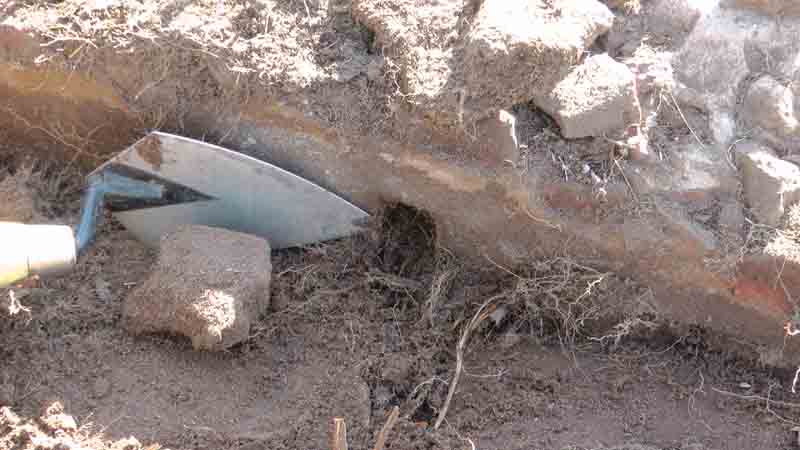
Last Sunday a reunion of volunteers who helped with the excavation of the Terrain Model on Cannock Chase was held at the Education centre on Marquis Drive. There were talks about the project and an short film of the excavations was shown. There was also opportunity to examine the finds, visit the Great War Hut, an excellent selection of cakes washed down with tea, coffee and a little Belgian beer.
Showing posts with label training camps. Show all posts
Wednesday, 1 October 2014
Monday, 7 October 2013
Cannock Model Information Boards
Our information boards have now been removed from the site for safe keeping, but copies are now available below.
Click the images to enlarge for reading:
Labels:
1914-1918,
1917,
archaeology,
cannock,
great war,
history,
messines,
midlands,
model,
nz,
nzrb,
operation kiwi,
staffordshire,
training camps,
ww1
Sunday, 22 September 2013
A Busy Day
Sunday was a very busy day at the Messines Model with a lot of visitors from near and far, quite a few also had personal connections to Brocton Camp or the New Zealand Rifle Brigade and it was great to hear their stories as we worked. For part of the day we also had musical accompaniment from Robert Owen, who played tunes from the Great War and New Zealand. In the afternoon we had an aerial visit from Peter Martin who kindly agreed to take some air photos for us. We were also visited by a birthday party group of youngsters who enjoyed Martin's explaination of the Battle of Messines and the model.
Progress on the excavation is going well, with some key points in the geography of the battle being revealed.
This part of the model shows the trenches at what is now the New Zealand Memorial.
Progress on the excavation is going well, with some key points in the geography of the battle being revealed.
This part of the model shows the trenches at what is now the New Zealand Memorial.
Charlie keeping watch.
Labels:
1914-1918,
1917,
archaeology,
battle,
cannock,
community,
family history,
great war,
history,
memories,
messines,
model,
no man's land,
operation kiwi,
participation,
training camps,
trench,
volunteer,
volunteering,
ww1
Saturday, 21 September 2013
Another good day on site.
Today has been another good day on site, with a good number of volunteers and a lot of visitors. Including one who brought along his father's war record detailing an injury sustained on the 7th of June 1917 at the Battle of Messines whilst serving with the Cheshire Regiment, who were part of the Anzac Division. We were able to show him the model of the area his father's battalion had attacked. The British units of the Anzac Corps are often overlooked and it was a pleasure to hear the story of one of the local men who had taken part.
Over all we are making excellent progress, and after a few frustrating days are once again uncovering areas of the model which are in very good condition.
Let's hope tomorrow is another great day.
Labels:
archaeology,
cannock,
community,
family history,
great war,
history,
messines,
midlands,
model,
no man's land,
nz,
operation kiwi,
participation,
training camps,
volunteer,
volunteering,
ww1
Preparing for Battle
"The men who fought in the Great War signed up at the town hall and were sent straight to France without any training, went over the top and were killed."
The above quote is a common held view, but is far from the truth.
The ordinary men who joined up in their masses in late summer 1914, began their training straight away. Many were shop assistants, bank clerks, teachers or the many non manual trades that were typical of Britain in the early 20th century, their fitness levels were far below that required for life in the army. Alongside them were men more accustomed to manual work, agricultural laborers, miners, delivery men and factory workers, the first task of war was to bring all the men up to the required standard of fitness. Much of the first few weeks of army life was devoted to physical training.
Across the parks and sports grounds of the British Empire, new recruits found themselves engaged in the type of activities they had last undertaken on the school field. Swedish Drill, running, route marches, gymnastics, boxing and football all played a part in lifting fitness levels.
There was also much to learn about military life, from maintaining discipline, uniforms and equipment, to rifle and bayonet practice, cookery, crossing rivers and digging trenches. It was these skills that were taught in training camps such as Brocton. Even today Cannock Chase, like many other sites across Britain, still bares the marks of this training.
Far from going "straight to France", the men who joined, for example, the New Battalions of the South Staffordshire Regiment in August and September 1914, remained in training in the UK until July 1915, almost a year of intensive training before they would embark overseas to face the enemy.
The above quote is a common held view, but is far from the truth.
The ordinary men who joined up in their masses in late summer 1914, began their training straight away. Many were shop assistants, bank clerks, teachers or the many non manual trades that were typical of Britain in the early 20th century, their fitness levels were far below that required for life in the army. Alongside them were men more accustomed to manual work, agricultural laborers, miners, delivery men and factory workers, the first task of war was to bring all the men up to the required standard of fitness. Much of the first few weeks of army life was devoted to physical training.
Across the parks and sports grounds of the British Empire, new recruits found themselves engaged in the type of activities they had last undertaken on the school field. Swedish Drill, running, route marches, gymnastics, boxing and football all played a part in lifting fitness levels.
There was also much to learn about military life, from maintaining discipline, uniforms and equipment, to rifle and bayonet practice, cookery, crossing rivers and digging trenches. It was these skills that were taught in training camps such as Brocton. Even today Cannock Chase, like many other sites across Britain, still bares the marks of this training.
Far from going "straight to France", the men who joined, for example, the New Battalions of the South Staffordshire Regiment in August and September 1914, remained in training in the UK until July 1915, almost a year of intensive training before they would embark overseas to face the enemy.
Friday, 20 September 2013
Tried and Tested Methods
Plumer's plan for Messines Ridge included a very ancient tactic to overcome the fortress of the enemy. He would tunnel beneath the lines and lay massive explosive charges beneath the key strong points to destroy them at the moment of the attack.
This tactic had been used on a smaller scale from early in the war, most famously at Hill 60, the much fought over high point close to Ypres, well known for the underground war as each side tried to out flank the other with silently dug tunnels, explosives and counter mines.
The mines at Messines Ridge were carefully planned, the geology studied in detail and small scale tests were carried out by the Royal Engineers in the UK and France. Tunneling for the Messines Offensive began in early 1915, no easy task in the dense blue clay of Flanders.
All the work had to be done in secret and in silence. Specialist Tunneling Companies were formed in the Royal Engineers, made up not of soldiers, but of miners, men who were used to working underground in the coal mines of the north of England, Canada and Australia and the men who worked on the tunnels for underground railways and canal systems. They began work behind the British Lines, with mine engineers sinking deep shafts through the layers of sand into the firmer clay below.
As the Second Army prepared in the training camps of Britain, including the New Zealand Rifle Brigade at Brocton Camp, the workers of the explosive factories prepared 600 tons of deadly ammonal, the miners extended the tunnels, inch by silent inch.
By the spring of 1917 Twenty Four mines had been laid, from twelve tunnels crossing No Man's Land 70 feet below the surface.
This tactic had been used on a smaller scale from early in the war, most famously at Hill 60, the much fought over high point close to Ypres, well known for the underground war as each side tried to out flank the other with silently dug tunnels, explosives and counter mines.
The mines at Messines Ridge were carefully planned, the geology studied in detail and small scale tests were carried out by the Royal Engineers in the UK and France. Tunneling for the Messines Offensive began in early 1915, no easy task in the dense blue clay of Flanders.
All the work had to be done in secret and in silence. Specialist Tunneling Companies were formed in the Royal Engineers, made up not of soldiers, but of miners, men who were used to working underground in the coal mines of the north of England, Canada and Australia and the men who worked on the tunnels for underground railways and canal systems. They began work behind the British Lines, with mine engineers sinking deep shafts through the layers of sand into the firmer clay below.
As the Second Army prepared in the training camps of Britain, including the New Zealand Rifle Brigade at Brocton Camp, the workers of the explosive factories prepared 600 tons of deadly ammonal, the miners extended the tunnels, inch by silent inch.
By the spring of 1917 Twenty Four mines had been laid, from twelve tunnels crossing No Man's Land 70 feet below the surface.
Labels:
1917,
cannock,
great war,
history,
messines,
nz,
nzrb,
operation kiwi,
plugstreet,
training camps,
ww1
Monday, 16 September 2013
Photographs and archaeology at the Messines Model
One of the more well known tales of the Model of Messines on Cannock Chase is the story of its use as a tourist attraction between the wars, when the custodian had a tin hut at one corner of the model and would give tours for a charge of six pence. In fact earlier in the week we had a visit from a gentleman who had taken the tour with his father in the 1930's and a relative of the custodian has made several visits to observe our progress.
Our amateur historians, Lee and Richard have been studying the photographs of the hut and working out where it was situated, by comparison to the existing landscape and the remains of the model as our team uncover them. Careful study of these small images has revealed vital elements of the history of the terrain model.
In one corner we have uncovered a very solid concrete construction and in the top soil close to the banking a small collection of debris including a bucket handle, bottle tops and broken glass, contemporary with the period the hut was in use. There are also traces of what could be the remains of the floor of the hut. Were these concrete blocks added to support the small hut? They are very solid and the presence of two post notches suggest that they may have been reused in situ rather than built for the hut. Perhaps part of a viewing platform for the troops? We know from photographs of the terrain models in Flanders, that they included a raised wooden platform for troops to view the model from above, was a similar arrangement in place here? We hope the archaeology will reveal the answer as we continue to excavate.
If anyone can help answer this question, please get in touch.
For a closer look at the 1930's photos please see http://www.staffspasttrack.org.uk/exhibit/chasecamps/archaeology.htm
Labels:
1914-1918,
archaeology,
cannock,
community,
family history,
great war,
memories,
messines,
no man's land,
nz,
operation kiwi,
participation,
staffordshire,
training camps,
volunteer,
volunteering,
ww1
Friday, 13 September 2013
Exploring Messines
Friday morning and our team have already stripped the turf from the southern end of the model town of Messines, close to the site of the church.
Messines Church today.
Here we should find the depiction of the Institution Royale which was built as a monastery and later used as an orphanage and in the early 1900's as a school. After the capture of Messines in 1914, the substantial buildings and their extensive cellars were fortified by the Germans to provide protection from Allied artillery and infantry advances.
A prewar post card of the Institution Royale in Messines.
German Concrete fortifications on the hill at Messines, possibly built inside the
Institution Royale, this image is from the collection of the Australian War Memorial.
Labels:
1914-1918,
1917,
archaeology,
cannock,
community,
family history,
great war,
messines,
midlands,
no man's land,
operation kiwi,
participation,
staffordshire,
training camps,
volunteer,
volunteering,
ww1
Wednesday, 11 September 2013
Interesting aspects
At the northern edge of the model our volunteers have just uncovered a very interesting area. Close to a trench system is what we first thought was going to be another section of road, but as the top soil was peeled back, inscribed lines were revealed between the pebbles.
What is? We're not sure yet, but hopefully all will be revealed.
We will let you know as soon as we know.
All ready to start
Another day on site, welcome to our new volunteers.
After spending yesterday working with the media we are looking forward to a quiet day cracking on with the archaeology.
If you'd like to join us there are volunteer places available.
Tuesday, 10 September 2013
TV Tuesday
Today, Tuesday 10th, BBC Midlands will be broadcasting live from the site on breakfast news bulletins.
There will also be a live broadcast on the evening news on Midlands Today.
If you are outside the Midlands area you can catch it on iplayer or via the BBC Midlands website.
Later today another crew from the BBC will be arriving onsite to provide live updates throughout the day on News24 and features on the BBC1 News at 1pm, 6pm and 10pm.
A clip from the broadcast.
Later today another crew from the BBC will be arriving onsite to provide live updates throughout the day on News24 and features on the BBC1 News at 1pm, 6pm and 10pm.
A clip from the broadcast.
Labels:
1914-1918,
archaeology,
bbc,
bbc1,
cannock,
great war,
messines,
midlands,
midlands today,
news,
news24,
no man's land,
operation kiwi,
participation,
staffordshire,
training camps,
tv,
volunteer,
volunteering,
ww1
Monday, 9 September 2013
Monday at Messines in Miniature
Firstly a special thank you to our volunteers and to Jaguar Landrover for supporting Operation Kiwi as part of their community initiative, today a were joined by several of their employees who swapped the tools on the Discovery line for a line trowels on our site. They all had an enjoyable day expanding their skillset to include archaeology under instruction from Jon, who moved up to the main trench as it continued to expand.
We look forward to working with them again tomorrow and with their colleagues later in the week.
We are also grateful for the support of Spring Slade Lodge on Camp Road, Cannock Chase for the use of their facilities. If you are on the Chase their tea room is an excellent place to take a break. www.springsladelodge.co.uk
Today the BBC have been on site, filming a report for Midlands Today, they will be broadcasting live from the site during the evening bulletin tomorrow, 10th Sept.
Work on the excavation is progressing well, today we uncovered more of the town of Messines, including a large pond to the west of the main street and part of the second line of defences to the north of the town.
Thanks to everyone who volunteered with us today, we had quite a few visitors offering their time, but there are still spaces available of you would like to join us.
We look forward to working with them again tomorrow and with their colleagues later in the week.
We are also grateful for the support of Spring Slade Lodge on Camp Road, Cannock Chase for the use of their facilities. If you are on the Chase their tea room is an excellent place to take a break. www.springsladelodge.co.uk
Today the BBC have been on site, filming a report for Midlands Today, they will be broadcasting live from the site during the evening bulletin tomorrow, 10th Sept.
Work on the excavation is progressing well, today we uncovered more of the town of Messines, including a large pond to the west of the main street and part of the second line of defences to the north of the town.
Thanks to everyone who volunteered with us today, we had quite a few visitors offering their time, but there are still spaces available of you would like to join us.
Labels:
archaeology,
bbc,
cannock,
community,
great war,
jaguar,
landrover,
midlands,
midlands today,
no man's land,
nz,
operation kiwi,
participation,
staffordshire,
training camps,
volunteer,
volunteering,
ww1
Sunday, 8 September 2013
Another successful day
The sun continued to shine most of the day and work is progressing quite well. Though the number of volunteers who actually turned up was a little disappointing.
Jon's team uncovered a good sized area and the model is in reasonable condition with just a small amount of root damage.
Our larger trench progressed more slowly with heavily damaged areas and dense roots making the work difficult in places. However the problem areas are beginning to be resolved and the features do match up with contemporary air photos.
At the back of a row of model houses on the northern edge of Messines, cleaning revealed the back door of one house had been included with a trench leading to it.
As the soil was peeled back this feature developed into a series of trenches leading to cellar entrances of each property in the block. This matches exactly with the 1917 trench map and air photos, showing the attention to detail in building the terrain model.
Our team and volunteers all had an enjoyable day, so much so that the additional hours have been pledged. But we are still short of labour on site so if you would like to be part of this unique project we would welcome your assistance. No experience is necessary, if you would like to learn about archaeology we would be pleased to teach you the basics.
Jon's team uncovered a good sized area and the model is in reasonable condition with just a small amount of root damage.
Our larger trench progressed more slowly with heavily damaged areas and dense roots making the work difficult in places. However the problem areas are beginning to be resolved and the features do match up with contemporary air photos.
At the back of a row of model houses on the northern edge of Messines, cleaning revealed the back door of one house had been included with a trench leading to it.
As the soil was peeled back this feature developed into a series of trenches leading to cellar entrances of each property in the block. This matches exactly with the 1917 trench map and air photos, showing the attention to detail in building the terrain model.
Our team and volunteers all had an enjoyable day, so much so that the additional hours have been pledged. But we are still short of labour on site so if you would like to be part of this unique project we would welcome your assistance. No experience is necessary, if you would like to learn about archaeology we would be pleased to teach you the basics.
Saturday, 7 September 2013
Saturday on site
After the down pours of Friday, we were happy to wake to blue skies and bright sunshine. Members of No Man's Land, Staffordshire County Council and our first volunteers met at the site for an introduction to the model and an overview of the military history of the Chase and the Battle of Messines.
Once orientated we moved inside the fenced area and began the task of revealing the terrain model, starting with the area previously excavated in 2006. Beneath the protective covering the model was in good condition and a small group supervised by Jon were quickly engaged in cleaning the miniature trenches.
The second group began work in the centre of the site, taking over the long trench opened last week. This trench centres on the cross roads of Messines and in comparing the model buildings to the 1916 trench map those of us who regularly stay in the town soon felt at home.
It must be remembered that the town was reduced to rubble in the opening bombardment of the Battle in June 1917 and the buildings we know so well were rebuilt on the original plots in the 1920s mostly in the same styles. As we revealed the concrete model buildings it became obvious that the model depicted the town in ruins, with fragments of brick representing shell damaged roofs.
The question is, what date does the model depict?
If you would like to join us, there are still volunteer places available, please email cannockwwiexcavations@gmail.com for further details.
The question is, what date does the model depict?
If you would like to join us, there are still volunteer places available, please email cannockwwiexcavations@gmail.com for further details.
Tuesday, 3 September 2013
Preparing for the Excavations
This week our team are preparing for the excavation. Staffordshire County Council are working with members of No Man's Land to co-ordinate the work.
If you would like to know more about the Great War Camps on Cannock Chase, please have a look at Staffordshire County Council's website, The Great War Camps of Cannock Chase.
The Great War archaeology group No Man's Land have a website at: www.no-mans-land.info
and to read about their work on the site of the 1917 Battle of Messines please visit:
http://www.plugstreet-archaeology.com
Thursday, 22 August 2013
Operation Kiwi
In just over a week we'll be starting excavation work on the Terrain Model of the Messines Ridge on Cannock Chase.
This is a view from the south of the village of Messines in West Flanders today, taken from the south side of the Petite Douvre.
Funding from Natural England has enabled Staffordshire County Council to work with Great War specialists from No Man's Land (The European Study Group for Great War Archaeology) to uncover and record a unique Terrain Model built by the New Zealand Rifle Brigade as a memorial to their victory at the Battle of Messines in July 1917.
During Operation Kiwi volunteers will work alongside specialists to excavate and record the model on the ground, both by conventional means as well as with a 3D laser scanner. A virtual model will be created as part of the overall project.
Excavation will run between Saturday 7th September and Sunday 29th September. If you would like to take part in this unique project contact cannockwwiexcavations@gmail.com to pledge your time.
This is a view from the south of the village of Messines in West Flanders today, taken from the south side of the Petite Douvre.
Funding from Natural England has enabled Staffordshire County Council to work with Great War specialists from No Man's Land (The European Study Group for Great War Archaeology) to uncover and record a unique Terrain Model built by the New Zealand Rifle Brigade as a memorial to their victory at the Battle of Messines in July 1917.
During Operation Kiwi volunteers will work alongside specialists to excavate and record the model on the ground, both by conventional means as well as with a 3D laser scanner. A virtual model will be created as part of the overall project.
Excavation will run between Saturday 7th September and Sunday 29th September. If you would like to take part in this unique project contact cannockwwiexcavations@gmail.com to pledge your time.
Subscribe to:
Posts (Atom)